Wednesday, June 29, 2011

9/11 - 10 years later ... what did we learn?

My eye was caught this morning by this article in the New York Times.
photo ©2001, Laurance Fendrick
For nearly 10 years, The New York Times has reported on the events of Sept. 11, 2001, and the subsequent local and global effects of the worst terrorist attacks ever to occur on American soil. Now, with the 10th anniversary of the 9/11 attacks a few months away, we want to hear from you.
During several days this summer, journalists on our multimedia team will be stationed at locations around New York and the region with video cameras, ready to record your thoughts about Sept. 11. Our purpose is to answer the question: What did you learn from 9/11?
It made me start thinking about it. You have all seen my personal account of that day, but what was learned is something I have never thought about before.

I think that we have had to learn that as large a country as we are, we are still vulnerable to terrorism. No foreign attacks on US soil had occurred since the War of 1812 (Pearl Harbor, Hawaii was a US territory at the time it was bombed by the Japanese), and I think that none of us thought it could happen here. There was the Oklahoma City bombing, but that was carried out by one of our own. The first clue we had was the bombing in the World Trade Center parking garage a few years earlier.

However, we have become the country that others have come to hate, so had we been thinking logically, the attacks of 9/11 were inevitable.

It certainly makes us think about the fragility of life. How many left their homes that morning and never returned to their families? These were not soldiers in the Middle East who knew their lives were in danger, but were victims of that war nonetheless.

So I ask you ... what do you think was learned by the events of 9/11 and the days following? What did you learn personally? If you live in the US - what should we have learned? If you live outside of the US, how was your country affected, if at all? (I am particularly interested in the non-US point of view so please share your thoughts.)

I look forward to reading your comments (below) on this ...

Sunday, June 26, 2011

Back in the day ...

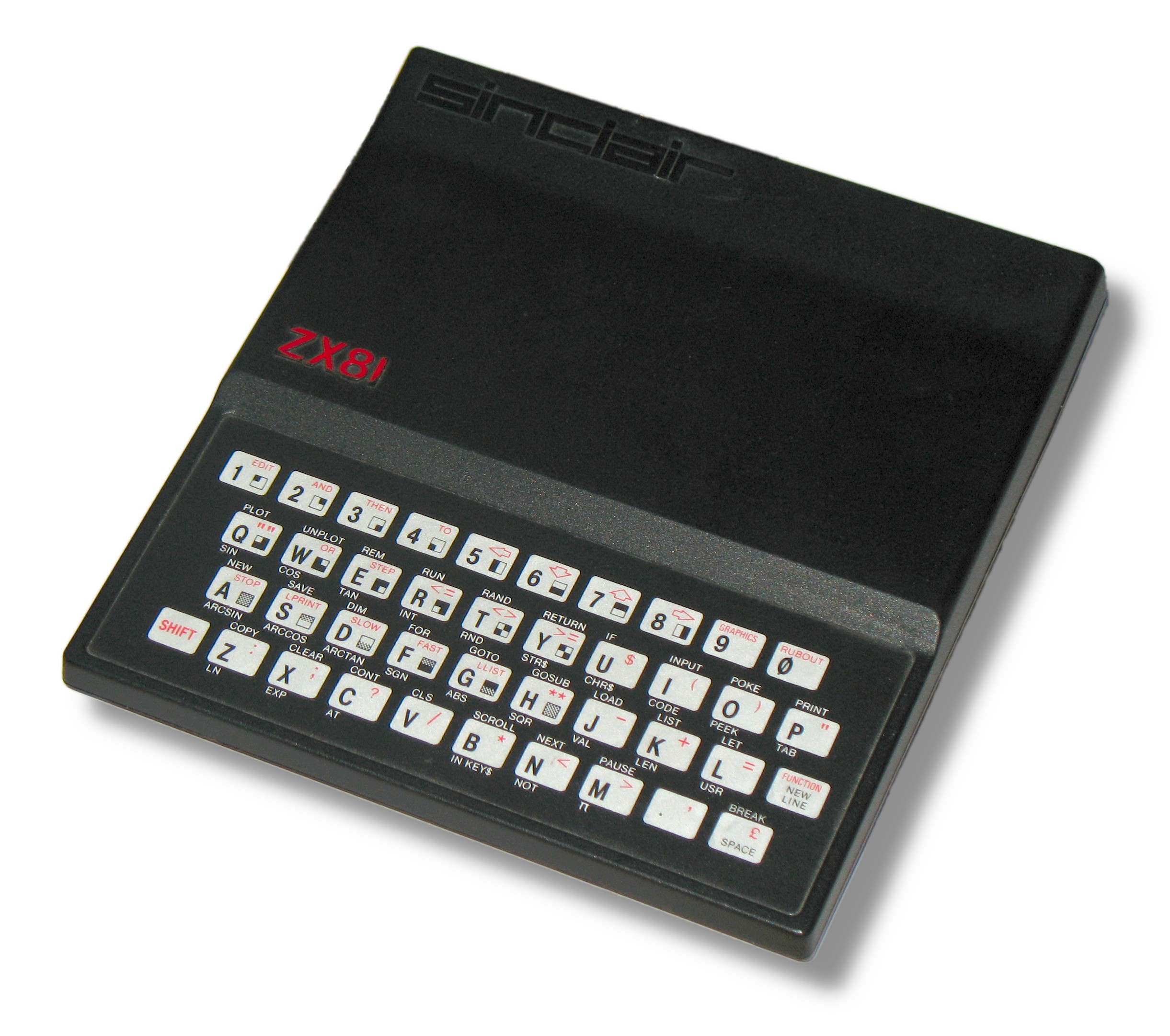
Just recently, in the most unlikely of places (a newsgroup dedicated to Disney theme parks), a discussion developed about the early days of home computing. (Yes, I am that old!) The home computing scene was much different in many ways back in the day.

The day I am talking about would have begun in the early to mid 1980's. At first, if you wanted a computer at home you needed to plunk down tens of thousands of dollars to have one. That changed in the early 1980's with a computer company in the UK, Sinclair. I was reading a current issue of Games magazine when I came across an advertisement for a computer for $99! Of course you needed to be handy with a soldering iron to put it together and get it to work, or you could buy it preassembled for about 50% more. I opted to put mine together, and soon after entered the age of  the personal computer.


Soon, other affordable computers started coming to market from Apple, Commodore, Radio Shack and others. Some computers which had been sold as game consoles also started selling kits which could be added to make them usable as "real" computers. Things started getting interesting.

Back then, I was writing a monthly column for Computer Shopper which, although basically a collection of computer advertising back then, started printing articles about these new computers coming into the market. And there were many. You could read about the new computers and what you could do with them. New hardware, new software and many technical articles were the order of the day. You were learning the down and dirty aspects of using a home computer.

If you owned a computer back in those days, most likely it was for the fun of seeing what could be done with it. Computers weren't yet the "appliances" that they are today where you simply use it as a tool to be productive, but were things that you played with. And I don't just mean game software. Many people learned the BASIC programming language that came with many of these early home computers. We would sit for hours trying to get something to happen - sometimes as simple as getting a pixel (or group of pixels) to appear on the screen. If you were really willing to give up sleeping, you might write a program which actually had some usefulness. I did! A few to be exact.

In those days, there was no internet and when you played with your computer it was to see what it could do. We scanned the magazines - paper magazines that is - pouring through each issue to see what new piece of software was in development or released for our computer which would give it new and previously unimagined capabilities. Each issue brought new ways we could modify our hardware, which was not made to be modified. At one time I added a second ROM chip to a computer so it could not only run the software written for it, but for that of another computer as well. This was hacking in its truest and most positive form.

There were numerous computers, with various operating systems and we wanted to see just what they could do. In those days it was all about local hardware and software.

Then the industry grew up. The dozens of computer operating systems shrunk to 2 (Apple and PC) and then 3 (Mac, PC and Linux). Playing on your computer is more about using the computer as a terminal for access to the internet now. Facebook and Twitter have replaced programming and local software as the most common computer activities (By the way - feel free to follow me on Twitter @marklf). Hacking has taken on a negative association. Using your computer with local software is now almost strictly for work or a utilitarian purpose - not for fun. Yes, there are still games on home computers, but they are very different, and often are played online with others as well.

The home computer revolution has matured and I miss the old days on the frontier.

Monday, June 20, 2011

A Spring Day in NYC - Through the lens (part IV)

Another lovely spring day here in New York City - we have strung together a few of them this past week - so my wife and I decided to head out to a bit of nature here and enjoy it. Allow me share some of it with you.

The first thing you see when you arrive is the Carousel for All Children, as it is known. Yes, the grandtwins have ridden it - but not yet this season.


 Next, we headed over to the lake.


To see all of the pictures click here or to see the video click here.

Friday, June 17, 2011

Owners Manual

What if people came with an owner's manual? Perhaps this would be mine:

Mark 58 - (1953 model year)

As you know, this model went into production very unexpectedly and caused quite a stir at its delivery, but owners took to it immediately. It did receive a lot of press coverage at its introduction. (Additional press coverage would happen again 24 years later.)

When it was new, it attracted quite a few ooohs and aaaahs at it's blonde roof and attractive front end, but as with all new models, there were soon others to replace it as the newest on the block.

In its heyday it spun off two models of its own which are currently the workhorses of the model line.

Today you might consider the Mark 58 to be a classic, and like all classics it has its own quirks and needs a little extra attention here and there. No longer the muscle unit it once was (or wished it was), today it is enjoying its reputation while cruising along at a much slower pace than at the height of its powers.

As in all classics, the wheels and the joints need a bit of extra looking after, and what is under the hood requires a little more care and additives than it used to, but still has most of its original parts. The grillwork has lost a little of its sheen, and a few pieces, but almost all is still on display and is the original equipment. These days, not needing to haul around parts for the newer models anymore, the trunk appears much more ample than it once did.

The fuel which it now requires must have less additives than it used to be able to handle - especially those which come from sugar cane or corn - but works just fine with the currently specified additives.

The headlights are a bit dimmer overall, but still work fine with the new boosters you can put on before taking it out for the day. Do not forget these or you will find your 1953 model Mark 58 might have a tendency to bump into things.

Additionally, do not forget to plug it in to its special machine at night so it doesn't make those horrible noises any more.

You will find that since it was repaired after its mechanical failure five and a half years ago, it has been taken care of much better and should provide reliable service for quite a few years to come.

And one final thing - it does best if stored around anthropomorphic mice, ducks, dogs, etc.

(Service papers available on request.)

So ... how might your owners manual read?